
29 Mar 2026

4 key pillars of the new standard

The LSRS introduces requirements across 4 areas:

  1. Mandatory traceability: Physical traceability is now a "must-have" for reporting specific categories like carbon removals. Companies must define clear spatial boundaries, from sourcing regions down to specific Land Management Units (LMUs), based on actual supply chain visibility and data quality. The LSRS does not recognize “Book & Claim” as a valid method for physical traceability.

  2. Land Use Change (LUC): The standard provides precise definitions for LUC sub-categories, such as the conversion of forests, grasslands and peatlands. It introduces more detailed rules for both direct LUC (traceable to a specific plot) and statistical LUC (modeled for a region) to ensure no land conversion emissions are overlooked.

  3. Land Use & Carbon Leakage: Everyone is now obliged to report on their land occupation. Additionally, high-risk sectors must now account for "carbon leakage": the risk that a company’s land-based interventions displace impacts elsewhere. This should be measured with the Carbon Opportunity Cost method.

  4. Removals & Permanence: Carbon removals must be reported separately from emissions to ensure transparency. To claim a removal, companies must prove physical traceability and monitor for reversals, when stored carbon is accidentally rereleased.

Although the new LSR Standard officially takes effect on 1 January 2027, we are now in a critical window for companies to transition to this new.

1. Traceability & Chain of Custody

Under the new standard, companies must define exactly where their land-based impacts occur. This “spatial boundary” depends on how far back you can see into your supply chain. The level of detail depends on which accounting categories are being reported. You may map your data at different levels, such as specific harvested areas or Land Management Units (LMUs), sourcing regions or jurisdictions, or global or country-level averages. For categories like carbon removals or direct Land Use Change, the requirement for physical traceability is back to the sourcing region or LMU. To prove your data is accurate, you must use a recognized Chain of Custody model. These range from keeping products entirely separated, to mixing them under strict rules:

  1. Identity Preserved: tracking a specific batch to its exact origin.

  2. Segregation: ensuring sustainable materials are kept physically separate from regular ones.

  3. Controlled Blending: mixing materials in known, specific proportions.

  4. Mass Balance: accounting for the volume of sustainable materials entering and leaving a system (this requires specific safeguards).

Critical note

The LSRS does not recognize “Book & Claim” as a valid method for physical traceability. This represents a significant shift for many producers who must now move toward more physically linked supply chain models.

How we support you

Traceability & Chain of Custody


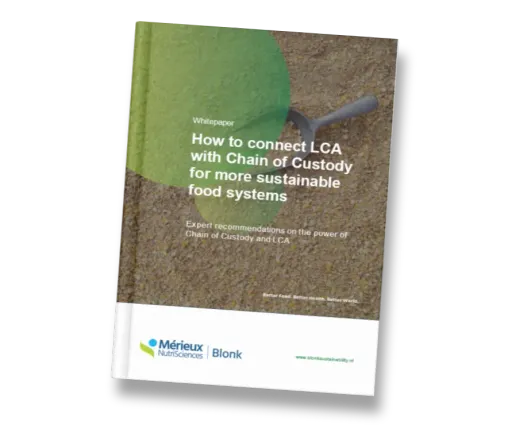
There is currently a global gap in guidance on applying Chain of Custody models within LCA calculations. To bridge this, we published a whitepaper offering expert recommendations on implementing Mass Balance, under controlled conditions. Or get inspired by this case study. Together with the chicken supply chain partners of the Dutch retailer Albert Heijn we explored the opportunities of a Mass Balance model under controlled conditions to establish reduction in the supply chain.

2. Land Use Change (LUC)

The new standard sets strict rules for how companies must calculate when land is converted, for instance, from forest to farmland. The LSRS establishes linear discounting as the preferred approach to account for LUC emissions over a 20-year period. Certain products with unique production cycles may use different timeframes, but any deviation from the preferred approach (for example, using equal discounting) requires strong justification in the reporting.

How we support you

Land Use Change

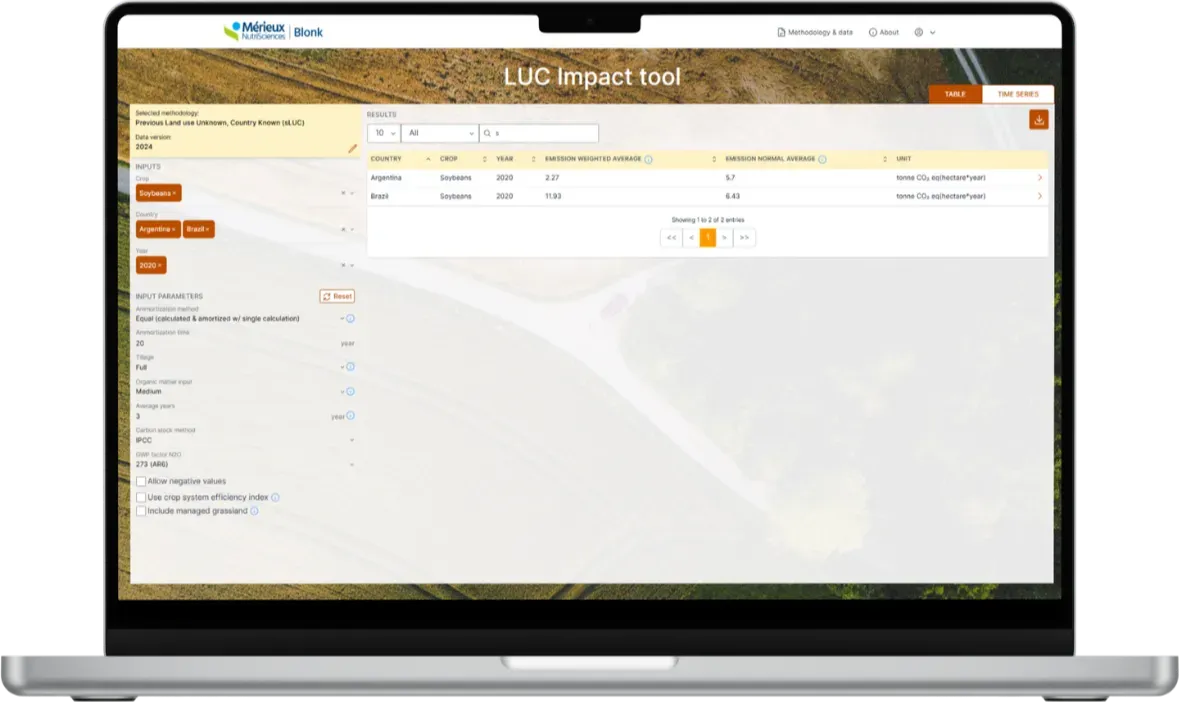
Calculating LUC emissions manually across diverse regions is a massive undertaking. Therefore, we developed the LUC Impact tool to make this process easier and faster. This solution is fully compliant with LSR, PAS2050 and SBTi FLAG.

The LUC Impact tool offers 3 different calculation paths for direct LUC and statistical LUC based on how much information is available on the country and land use in question. While the new LSR Standard prefers linear discounting, our tool supports both linear and equal discounting approaches to cover all reporting scenarios. Furthermore, we also offer access to the LUC Impact Datasets to integrate compliant values directly into your reporting. 

3. Land Use & Carbon Leakage

The LSR Standard introduces Land Use and Carbon Leakage as new reporting categories. Unlike the standard GHG emissions, these focus on the physical footprint of your land and the unintended consequences of land-use decisions.

Measuring Land Occupation

Companies must now report exactly how much land they use, measured in hectares of cropland or grassland. This provides a clear picture of the physical “real estate” your supply chain occupies. 

Carbon Leakage

 “Leakage” occurs when protection in one area simply pushes environmental burden elsewhere. Reporting on this is now mandatory for high-risk sectors such as when:

  1. Food or agricultural land is shifted to non-food/non-feed uses

  2. When land previously used for food is converted into a carbon removal project, causing a drop in food supply, and

  3. When new land management strategies significantly reduce crop yields, forcing more land to be cleared elsewhere to make up for the difference. 

How we support you

Land Use & Carbon Leakage

Carbon Opportunity Cost integration

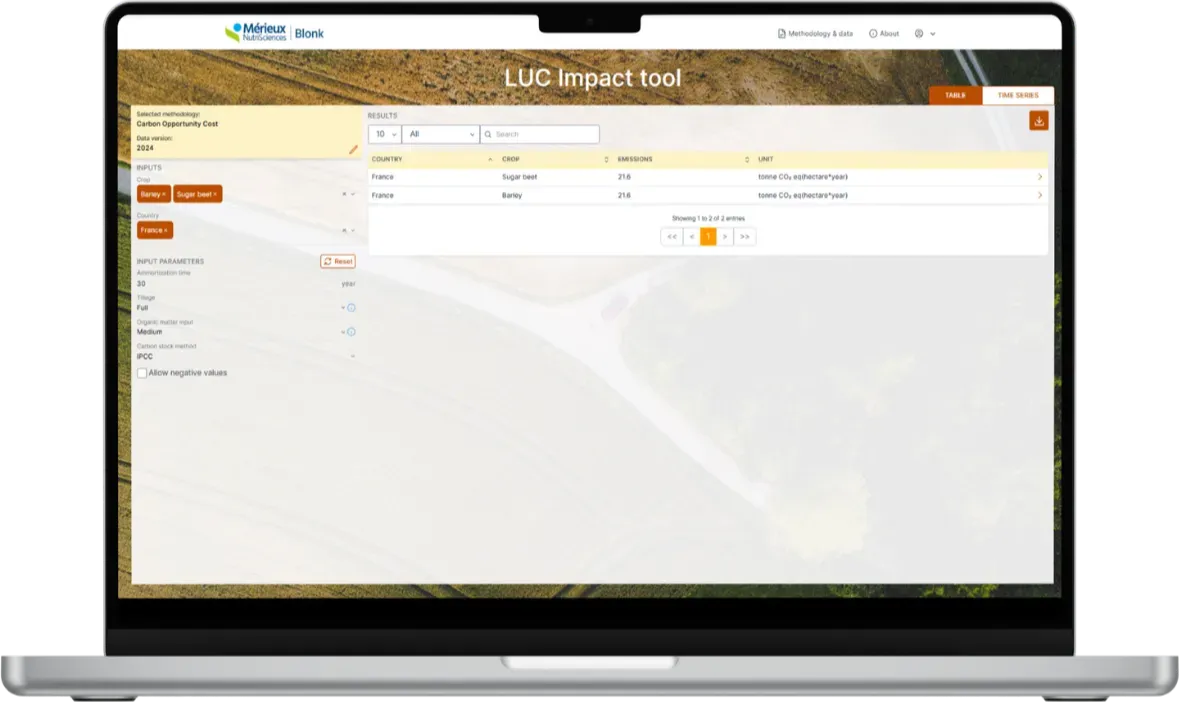
The new LSRS suggests Carbon Opportunity Cost as a key metric for reporting Carbon Leakage. It represents the carbon that would be stored in the native vegetation if your supply chain was not occupying said piece of land. In our LUC Impact tool and datasets, we have integrated the Carbon Opportunity Cost methodology. We are among the first in the industry to integrate this directly into an LCA tool and LCA datasets.

It uses parameters such as soil carbon content, biomass of crops and carbon stock of potential natural vegetation (PNV) based on international standards such as the IPCC 2019 and PAS2050. Calculations are fully aligned, ensuring your “leakage” reporting is scientifically robust and audit ready. 


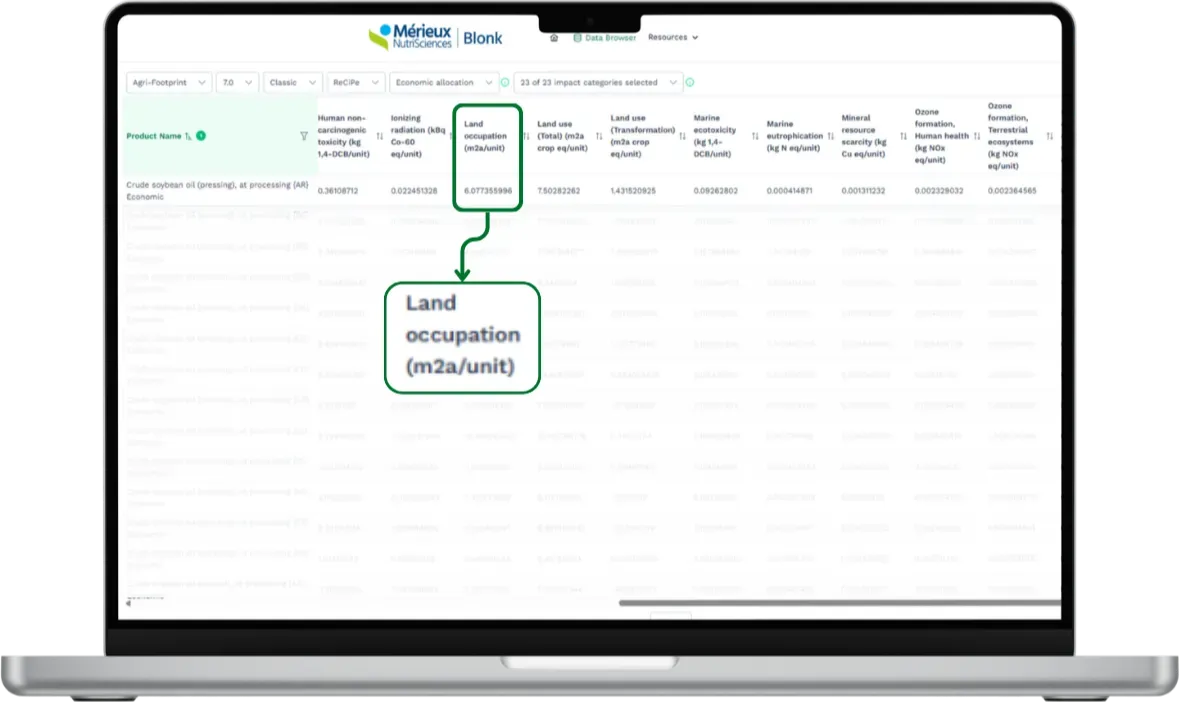
Land Occupation in Agri-footprint

Reporting on Land Occupation is now a requirement. Our Agri-footprint LCA database includes Land Occupation results, empowering you to report on this in a compliant way. 

Moreover, we also offer a FLAG version of our Agri-footprint database, fully aligned with the SBTi FLAG guidance and integrating the detailed FLAG impact category data breakdowns.

Moving toward 2027

The road to 2027 requires high-quality data and a clear understanding of your land-based footprint. At Mérieux NutriSciences | Blonk, we provide the expertise, data and tools to bridge the gap between your current data and the requirements of the new LSRS.

More information

Get in touch

Samragi; Consultant@ Blonk
Samragi Chatim
Consultant

Are you ready to transition? Or do you have questions about the new Land Sector and Removals Standard? Contact our experts today to see how we can support your journey toward a compliant and sustainable food system. Get in touch with Samragi.